Skip to content

Customer recognition
powered by the network.

The Marketing Identity Hub for Telcos combines deterministic identity resolution with native network signals so telecom operators can recognise customers across devices, domains, and channels, even when they’re not logged in.

This page explains how the Marketing Identity Hub fits into an existing telco martech architecture. It is intended for technical, IT, and architecture stakeholders involved in evaluation and delivery. This page answers how it works; a short discussion confirms what’s possible in your specific network setup. Built for Europe’s privacy frameworks and proven in large-scale telco and Utiq deployments.

The role of the Marketing Identity
Hub in a telco stack.

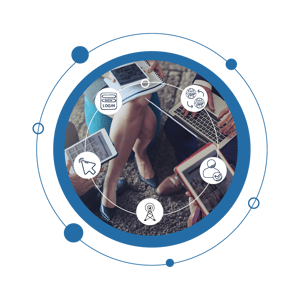
The Marketing Identity Hub operates as a dedicated identity layer between digital touchpoints, telco network signals, and downstream marketing, CVM, and data systems.

It is designed to solve a specific gap: making customer identity usable at interaction start, before login, without restructuring existing systems.
HUB_GR-02
It does not replace your stack.
It makes it work together earlier.
What it does in practice:

People centric consent, built for
real-time identity and activation.

• Consumes consented network-based identity signals where available.
• Resolves them deterministically against existing customer and household data.
• Exposes recognised identities to authorised activation and analytics systems.

The Hub is designed to operate within existing telco 
architectures, not alongside them.

BOOST
What changes for telcos

Where network identity becomes usable for real-time action.

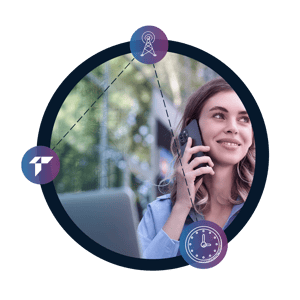
Telcos are uniquely positioned to recognise customers earlier because identity already exists at the network level. The Marketing Identity Hub extends deterministic identity resolution with consented network signals, creating a stable and privacy safe foundation for customer recognition beyond login only or IP-based methods.

This enables telcos to:

• Anchor digital interactions to stable, pseudonymous network signals.
• Link app, web, and backend activity to real customer profiles.
• Recognise customers consistently across devices and sessions.
• Make recognised identity usable in real time across marketing, analytics, and data platforms.
telco_changes
All delivered as an identity layer on top of your existing martech
and CVM stack without third party cookies or probabilistic matching.

Built for real world telco complexity.

Multi brand portfolios, fragmented systems, and shared households are structural realities in telecom.
The Hub is designed for exactly these conditions.
cross Cross-domain identity across brands and sub-brands

One customer recognised across brands and domains:

Most telcos operate multiple brands, propositions, and domains. The Marketing Identity Hub enables cross-domain customer recognition without third-party cookies, allowing customers to be recognised consistently across authorised brand properties once consent is given.

Prevents duplicate acquisition, supports coordinated contact strategies, and enables consistent journeys across premium and value brands.

 
personalisation One identity layer across fragmented stacks

Works across multiple customer systems without consolidation:

Mobile and fixed stacks, legacy and modern platforms, and systems from acquisitions often coexist for years. The Marketing Identity Hub acts as a unifying identity layer on top of existing CRM, billing, and CVM systems.


Deterministic referencing links identities across systems without forcing data model unification or platform replacement.

 
ID GRAPH-1 Household recognition by default

A dynamic household view built in:

In fixed and converged environments, customers share connections. The Hub automatically groups profiles into a dynamic, pseudonymous household view based on network usage, fully consent-driven.


Enables household-aware communication, better convergence strategies, and more accurate measurement without static address matching.

 
Network level identification & Utiq:

Two paths, one approach.

Designed for telcos  whether you are a Utiq ID Provider or not.

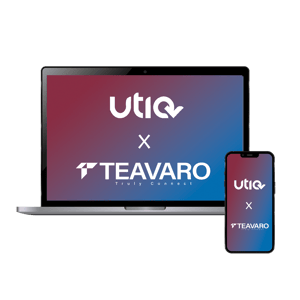
The Marketing Identity Hub is built to operationalise network-level identity across different telco setups. Whether you already act as a Utiq ID Provider or use network identification independently, Teavaro provides a consistent way to make network signals usable for customer recognition and activation.
utiq xteavaro
For telcos that are already a Utiq ID Provider:

goodLink Utiq identity to customer profiles across app, web, and backend systems.


goodMaintain stable, pseudonymous identifiers while consent is active.


goodResolve identity in real time for marketing, analytics, and data platforms.


goodExtend monetisation and activation use cases using consented telco data.

Teavaro reuses existing Utiq network identity infrastructure with minimal configuration effort. Integration builds on established signals and avoids intrusive changes to core network systems.

For telcos that are not a Utiq ID Provider:

Personal-level recognition on mobile networks.


Household-level recognition on fixed networks.


Consistent recognition whenever users access digital services via the telco network.


Telcos without Utiq can still leverage network-level identification through existing network capabilities such as header enrichment or subscriber ID APIs.


Privacy, consent, and regulation, by design.

Built for telcos’ privacy reality, not adapted to it.

The Marketing Identity Hub is designed for Europe’s telecom and privacy frameworks. All identification is deterministic, first-party, and governed by explicit user consent.

By design:

• Identification remains pseudonymous.
• Consent is enforced in real time at execution
• Identify lifecycles align with regulatory requirements.
• Full transparency into how identifies are built and used.
telco2-circle

This makes Teavaro suitable not just for marketing 
but for long-term identity operations inside telco organisations.

Why telcos choose Teavaro.

A proven identity infrastructure partner for telecom operators.

Proof Points:
• Over a decade of experience operating large scale identity systems in regulated environments.

• Strategic innovation partnership with Utiq.

• Deep understanding of mobile and fixed network realities.

• Enterprise grade, server side architecture built for scale.

• Identity as infrastructure, not a black box dependency.
telco4-increise-1

This allows telcos to adopt network-based identity 
without building or maintaining custom identity infrastructure themselves.

Common technical and regulatory questions we discuss during telco evaluations.

Telco Specific FAQ

How does network-level identification change what telcos can do compared to traditional digital identity?

It significantly increases how many customers can be reliably recognised across digital channels beyond what login-based methods can achieve.

Traditional digital identity relies primarily on login-based identification, sometimes complemented by offline, IP-based stitching in data warehouses. These approaches are limited when customers are not consistently logged in, identifiers are short-lived, and identity reconciliation happens with delay.
Telcos operate at the network level, where customer connections are inherently more stable. By incorporating consented network-level signals into the Marketing Identity Hub, telcos can recognise customers across devices, browsers, and sessions even when they are not logged in, as long as consent is in place and customers access digital services via the telco network.
This leads to consistently higher recognition rates on web and app environments, enabling earlier personalisation, cleaner attribution, and more effective customer base management than web-only identity approaches.

How does the Marketing Identity Hub integrate with mobile and fixed network environments?

It integrates natively with telco network signals while fitting cleanly into existing digital, CVM, and backend systems.

The Marketing Identity Hub is designed to ingest identity signals from both digital touchpoints (web, app, backend systems) and telco network environments. For mobile and fixed networks, this includes secure, consent-driven network identifiers that can be linked to digital behaviour in real time.
Together with your network engineering teams, we assess whether existing capabilities—such as header enrichment or subscriber ID APIs—can be used to enable deterministic customer recognition across your networks. Integration is server-side and enterprise-grade, avoiding intrusive changes to core network systems.
This approach enables:
* Personal-level recognition on mobile networks.
* Household-level recognition on fixed networks.
* Consistent customer recognition whenever users access digital services through your networks.
All identification remains deterministic, consent-driven, and privacy-safe extending recognition well beyond what login-only or web-based methods can deliver.

Can we link network identity with our existing customer, CVM, and billing systems?

Yes. Network identity can be linked to existing customer and CVM systems through deterministic identifiers.

Telcos already maintain rich customer data across CRM, billing, CVM, and service platforms. The Marketing Identity Hub acts as a unifying layer that links network-level identifiers with existing customer IDs in a controlled, deterministic way. This allows digital behaviour to be connected back to contractual customers without duplicating systems or rebuilding data models enabling CVM teams to operate with a more complete, real-time customer view.

How does this support omnichannel journeys across app, web, service portals, and retail locations?

By recognising the same customer consistently across digital and physical touchpoints.

Telco customer journeys span far beyond marketing channels. Customers move between apps, websites, service portals, contact centres, and physical stores often within the same lifecycle. The Marketing Identity Hub links these interactions through deterministic identity signals, allowing customers to be recognised as the same person across channels. This enables more consistent experiences, better service continuity, and more accurate attribution across the full telco journey not just digital marketing touchpoints.

How does this help improve retention, base management, and customer lifetime value?

By making customer behaviour visible earlier and more consistently across touchpoints.

Retention and base management depend on recognising early signals research behaviour, service interactions, or changes in usage before customers churn or downgrade. Network-level identity allows telcos to connect these signals across channels and sessions, even when customers are not logged in. This enables CVM teams to act earlier, personalise offers more accurately, and measure impact more reliably, improving lifetime value rather than focusing solely on acquisition efficiency.

How does Teavaro work with Utiq for consuming network-level identity?

Teavaro acts as the identity graph and real-time activation layer on top of Utiq network signals.

When consuming Utiq identity, the Marketing Identity Hub ingests consented Utiq identifiers and links them deterministically with first-party digital and customer data across app, web, and backend systems. Integration builds on existing Utiq network signals and does not require intrusive changes to core network infrastructure.
By layering Teavaro on top of Utiq, telcos can maintain a stable, pseudonymous identifier for their own customer base as long as customers remain active and consent is in place rather than relying on short refresh cycles alone. Teavaro manages identity resolution, lifecycle management, and real-time activation, making Utiq signals immediately usable across marketing, analytics, and data platforms.
This allows telcos to operationalise Utiq identity for their own use cases and activation needs without building or maintaining custom identity infrastructure themselves.

What additional capabilities do we get if we are a Utiq ID Provider?

You can operate your own network-based identity graph and use it as strategic infrastructure, not just for monetisation.

For telcos acting as Utiq ID Providers, Teavaro extends capabilities well beyond monetising network identity alone. The Marketing Identity Hub enables ID Providers to build and operate a dedicated, deterministic identity graph based on consented network-level signals—linked in real time to digital behaviour and existing customer data.
This allows ID Providers to:
* Maintain stable, pseudonymous identifiers for their own customer base, as long as customers remain active and consent is in place.
* Link network identity with app, web, and backend interactions to create a unified customer view.
* Activate identity in real time across marketing, analytics, and data platforms.
* Support advanced monetisation use cases, such as audience activation and data enrichment.
By doing so, ID Providers move from supplying network signals to owning and operating a full identity and activation layer turning network identity into a long-term strategic asset rather than a transactional capability.
 

Can we operate our own network-based identity graph and use it beyond marketing?

Yes. The identity graph is owned by the telco and can support multiple use cases.

The Marketing Identity Hub is not limited to marketing activation. Telcos fully own and control the identity graph, which can be used across analytics, personalisation, CVM, service optimisation, and future AI initiatives. Because the graph is deterministic, transparent, and consent-driven, it can serve as long-term identity infrastructure rather than a campaign-specific tool.
 

How does this fit into telco-grade privacy, consent, and regulatory requirements?

Privacy, consent, and regulatory compliance are enforced by design.

All identity resolution is deterministic, first-party, and based on explicit user consent. Consent signals govern which identifiers can be used, how identities are linked, and where data can be activated. The Marketing Identity Hub supports GDPR, ePrivacy, and telecom-specific regulatory requirements, with full transparency, auditability, and lifecycle management. This ensures telcos can operate network-level identity confidently within strict legal and contractual frameworks.

Build customer recognition on the strongest signal you already have.